Duluth Hardwood Floors: Hardwood Floor Refinishing, Sanding and Repair in Duluth, MN
Duluth Hardwood Floors is a hardwood flooring contractor serving Duluth, Minnesota and the Twin Ports. We provide hardwood floor refinishing, drum and orbital sanding, custom staining and color matching, water damage and cupping repair, dustless refinishing, board replacement, gap filling, stair and tread refinishing, screen and recoat maintenance, and commercial floor restoration. We work in red oak, white oak, hard maple, Douglas fir and heart pine, finishing in oil-based polyurethane, water-based polyurethane such as Bona, and penetrating hardwax oil.
Most Duluth houses were built before 1940, and the floors are still under the carpet. We meter the wood and the subfloor before a sander is switched on. Sand a cupped floor flat while it is still wet and it crowns when it dries, which cannot be undone. Finishes are Bona water-based polyurethane, oil-based polyurethane, or Rubio Monocoat hardwax oil. You approve a stain patch on your own floor before we commit to it.
Call for a Free Estimate- Licensed and insured in Minnesota
- Locally owned, not a franchise
- Oak, maple, Douglas fir and heart pine
- Dustless refinishing available
- Serving Duluth, Hermantown, Proctor and Cloquet
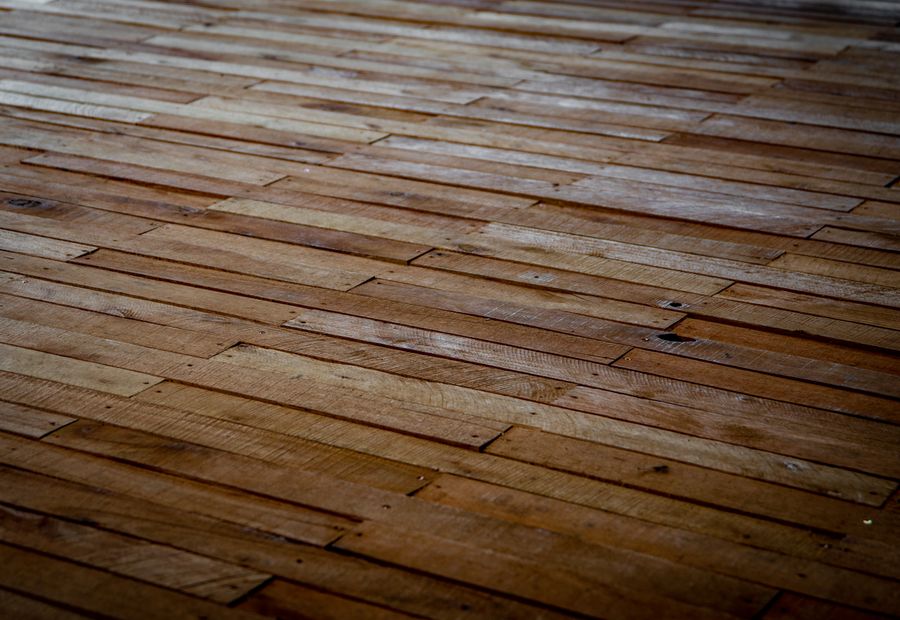
Hardwood Floor Sanding and Refinishing
Sanding takes a floor back to bare wood and a fresh finish seals it for another decade or more. In Duluth the finish is doing harder work than it would in a mild climate, because it is the barrier between old wood and one of the widest annual humidity swings in North American housing.
We sand and refinish hardwood floors throughout Duluth and the Twin Ports. Most rooms take two to three days from first cut to final coat. Basic sand and refinish runs $3 to $6 per square foot; with custom stain, $4 to $8.
Custom Staining and Color Matching
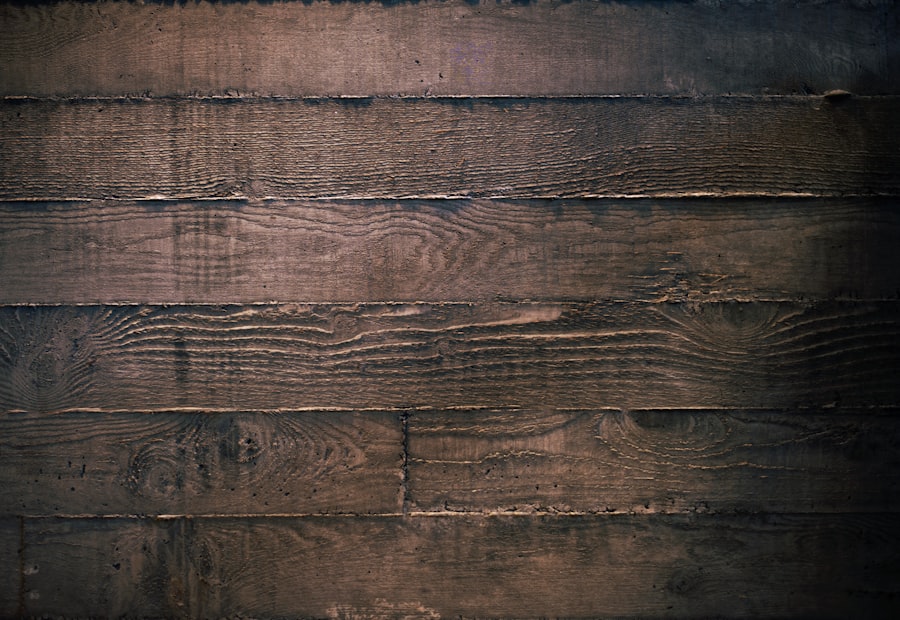
Duluth houses run to smaller windows and long grey winters, which changes what a stain does in the room. A dark walnut that reads rich in a south-facing house can read heavy here from November to March. Lighter naturals and warm mid-tones hold up better across the season.
Species matters as much as color. Red oak takes stain readily with strong grain contrast. Hard maple resists it and blotches if it is not conditioned first. Douglas fir drinks it unevenly. We apply test patches on your own floor before committing. More on staining.
Water Damage and Cupping Repair
Cupping is the most common hardwood failure in this city and the lake is the reason. Indoor air runs bone dry through a long heating season, then summer pulls humidity straight off Lake Superior. Add a stone or block basement under an old house and the subfloor stays wetter than the room above it. The plank edges lift and the floor feels uneven underfoot.
We meter both the surface and the subfloor before sanding, and we find the moisture source first. Sanding a cupped floor flat while it is still wet guarantees it cups again once it dries. Water damage repair details.
Dustless Refinishing
Duluth winters mean the windows have been shut since October. Traditional sanding puts fine dust through every room in a sealed house, and in anything built before 1978 that dust can carry lead from old paint and finish layers.
Dustless refinishing pulls the dust into sealed containment at the sander, capturing around 99% before it becomes airborne. Paired with water-based finish it is what makes staying in the house realistic in February. Learn about dustless.
Screen and Recoat
Not every tired floor needs sanding. If the polyurethane is dull and scratched but the wood is still sealed, a screen and recoat renews the surface for about half the cost, in a single day, and removes no wood at all.
That last part matters here. A solid floor takes three to five sandings in its life, and in housing built in the 1890s and 1900s a good share of that budget has already been spent by previous owners. More on screen and recoat.
Why Duluth Floors Move So Much
Duluth sits on the north shore of Lake Superior, and the lake sets the terms for every solid wood floor in the city. Through a heating season that runs most of the year, indoor relative humidity drops well below the 30% to 50% band that hardwood is happiest in. Boards shrink and gaps open. Then summer arrives off the water and the same boards swell shut again.
A floor that shows open seams in February and none in August is not failing. It is doing exactly what solid wood does at this latitude, next to that much water. What it means practically is that timing changes the work. Fill wide winter gaps and the filler is crushed out when the boards expand in July. We fill at the shoulder of the season, or we leave seasonal movement alone and explain why.
It also means finish choice is not cosmetic. A floor here goes through a bigger dimensional cycle than the same floor in a milder climate, and the finish has to flex with it rather than crack at the seams.
What Refinishing Costs in Duluth
Real ranges for the Duluth and Twin Ports area. Your actual price depends on floor condition, square footage and scope. Every job gets a free written estimate first.
| Service | Per Sq Ft | Room (250 sf) | Main Floor (1,200 sf) |
|---|---|---|---|
| Screen and recoat | $1.50 - $3 | $375 - $750 | $1,800 - $3,600 |
| Basic sand and refinish | $3 - $6 | $750 - $1,500 | $3,600 - $7,200 |
| With custom stain | $4 - $8 | $1,000 - $2,000 | $4,800 - $9,600 |
| Dustless refinishing | $5 - $8 | $1,250 - $2,000 | $6,000 - $9,600 |
| Stair treads (per step) | $25 - $85/step | ||
| Board replacement | $8 - $15/sf | Varies | Varies |
Species You Will Find in Duluth Houses
Red Oak and White Oak
The default in most of the housing stock. Red oak has a pinkish cast and open grain that takes stain readily. White oak is tighter, slightly golden, and naturally more water-resistant, which is why it turns up in entries and kitchens.
Hard Maple
Common in this region because it grew here. It is harder than oak and sands to a denser surface, but it burnishes if the grit sequence is wrong and it blotches under stain unless it is conditioned first. Maple is where an inexperienced operator does visible damage.
Douglas Fir
Very common in Duluth, especially upstairs and in the hillside houses, because it was cheap and moving through the port when these homes went up. It is soft, it sands fast, and it will scallop under a heavy hand. Beautiful when it is done properly.
Heart Pine
Occasional, mostly in the oldest buildings. Dense, resinous, and effectively irreplaceable outside salvage.
Frequently Asked Questions
How long does refinishing take?
Two to three days for most single rooms: a day to sand, a day for stain if you want it, a day for finish coats. A whole main floor is three to five days. Water-based polyurethane recoats in four to six hours against 24 hours for oil-based, so the finish you choose changes the timeline more than the square footage does.
Can I stay in the house during a Duluth winter?
With dustless equipment and water-based finish, usually yes. That combination is specifically what makes it workable when the windows cannot be opened. With traditional sanding and oil-based poly, most people move out of the rooms being worked on for a couple of days.
My floors have gaps. Are they ruined?
Almost certainly not. Check them again in July. Seasonal gapping is normal in this climate and closes on its own. Gaps that stay open year-round, or that have loose or cupped boards alongside them, are a different problem and worth looking at.
Is there hardwood under my carpet?
In housing this old, very often yes. Pull back a corner in a closet, or look at the edge of a floor register. Carpet shields wood from sunlight and traffic, so what is underneath is frequently in better shape than the exposed areas around it. Tack strip and staple holes fill and disappear under a refinish.
How many times can a floor be sanded?
Three to five over its life, depending on original thickness and how much has already gone. Plenty of Duluth floors are on their second or third pass. We measure what is left above the tongue before committing, and recommend a recoat instead if it is thin.
Do you work outside Duluth?
Yes. Hermantown, Proctor, Cloquet, Esko, Carlton, Scanlon, Two Harbors and Rice Lake are all regular. If you are on the edge of that, call and ask.