Hardwood Floor Sanding and Refinishing in Duluth, MN
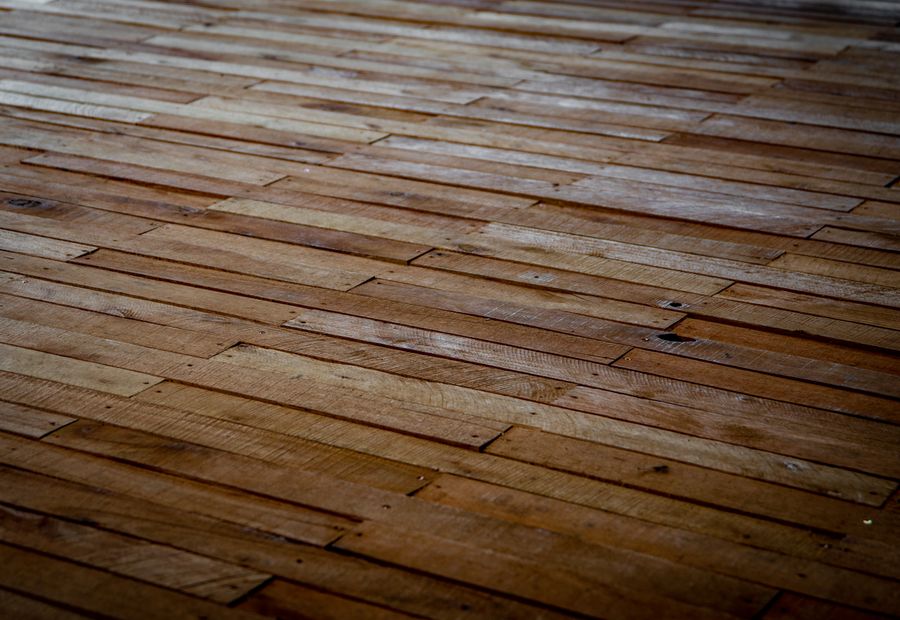
Sanding takes a floor back to bare wood and a fresh finish seals it for another decade or more. In Duluth that matters more than it does in a mild climate, because the finish here is not just cosmetic. It is the barrier between the wood and an annual humidity swing that is about as wide as North American housing gets.
Why Duluth Floors Move So Much
Duluth sits on the north shore of Lake Superior. Winter indoor air runs bone dry for months on end while the heat is on, and summer pulls humidity straight off the water. Wood follows that cycle, shrinking in January and swelling in July. A floor that shows open gaps in February and none in August is not failing. It is behaving exactly as solid wood does here.
What this means for a refinish is that the timing of gap filling matters. Fill wide winter gaps and the filler is crushed out when the boards swell in summer. We fill at the shoulder, or we leave seasonal gaps alone and tell you why.
What Is Actually Under Your Carpet
Most of this housing went up between the 1890s and the 1920s, during the ore and shipping boom, and it was floored with what was moving through the port. Red oak, hard maple and Douglas fir all turn up, sometimes in the same house, with oak in the public rooms and fir upstairs where it would not be seen.
Species changes the job. Oak sands predictably and takes stain well. Maple is harder and burnishes if the sanding sequence is wrong, so it needs finer grits and a lighter hand. Fir is soft, sands fast, and will scallop if the operator is careless. We identify species before quoting rather than after starting.
The Process
An on-site inspection first: species, thickness above the tongue, moisture readings, and any damage. You get a written scope and price. On the day we move furniture, seal doorways and protect baseboards. Sanding is one day for most rooms, progressing coarse to fine. Stain, if you want it, goes on the next day after you approve a test patch on your own floor. Then two to three coats of polyurethane with a light abrasion between coats. Socks on it within 24 hours of the last coat.
Finish Choice in This Climate
Oil-based polyurethane is durable and adds amber warmth, but it needs 24 hours between coats, which stretches the job in a house you are living in through a Duluth winter. Water-based dries in four to six hours, stays clear rather than yellowing, and has far lower odour, which matters when the windows have been shut since October. For most homes here we recommend water-based in satin, and we carry both.
What It Costs
Basic sand and refinish runs $3 to $6 per square foot. A single 250 square foot room is roughly $750 to $1,500, a 1,200 square foot main floor roughly $3,600 to $7,200. Custom stain adds $1 to $3 per square foot. Every job gets a free written estimate before anything starts.
Is it worth refinishing floors in an old Duluth house?
Usually, yes. Housing here largely went up between the 1890s and 1920s while the port was moving timber, so the floors were laid with good local stock. That wood is denser than modern equivalents and it is already acclimatised to a century of this climate. Refinishing keeps it. Replacement swaps it for something softer.
Does the lake affect when I should have this done?
It affects the result more than the timing. Wood is at its driest in late winter, so a floor sanded in February will have its widest gaps, and those gaps close in summer. If you want gaps filled, we would rather do it in the shoulder season when the wood is nearer its average width, otherwise the filler cracks out.
How many times can these floors be sanded?
Three to five times over the life of the floor, depending on original thickness and how much has already been taken off. Plenty of Duluth floors are on their second or third pass. We measure what is left above the tongue before we commit, and if it is thin we will say so and recommend a recoat instead.
Will you find fir under the carpet?
Sometimes, especially in the hillside houses. Douglas fir was cheap and local when these homes were built, and it takes a beautiful finish, but it is much softer than oak. It needs a lighter sanding sequence and it dents more easily afterwards. We identify species before quoting.
Do I need to be out of the house?
For traditional sanding, most people prefer to be out of the rooms being worked on. If staying put matters, ask about dustless, which captures the dust at the sander, paired with water-based finish for lower odour.