Stair Refinishing in Duluth, MN
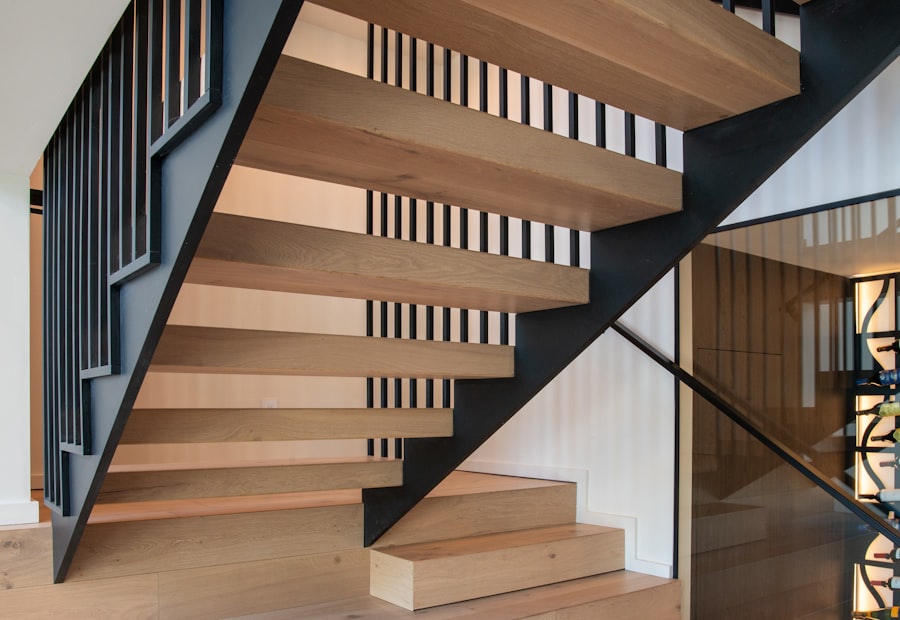
Stairs take more wear per square foot than any floor in the house, and in Duluth they take more of it than in most places. The housing is built into a serious grade, which means split levels, half-landings, and staircases that carry every trip between floors in a house where the living space is stacked rather than spread.
What Gets Refinished
Treads
The horizontal surface. Where all the wear concentrates, particularly on the nosing at the front edge, which is the first part of any staircase to go through to bare wood.
Risers
The vertical face. Often painted in these houses, and the two-tone look of stained treads over painted risers is original to a lot of them rather than a modern choice.
Newel posts and handrails
Hand-sanded and finished to match. On the more ornate staircases in the older Duluth neighborhoods this is where the hours go.
Balusters
The spindles. Turned balusters are done individually and there may be forty of them. This is the single biggest driver of cost on a decorative staircase.
Carpet Removal
A large share of stair work here starts with pulling carpet that went down in the 1960s or 1970s over original oak or fir. The wood underneath is usually in better shape than the exposed floors around it, because carpet shields it from light and traffic. Tack strips and staples leave holes around the perimeter and across the treads, and those fill and vanish under the refinish.
Access in a Hillside House
Duluth houses frequently have one staircase and no alternative route upstairs. We work top-down so there is always a way through, and where a staircase is the only access we phase it across days rather than closing it. If the house has a back stair, that carries traffic while the main one is done.
What It Costs
$25 to $85 per step depending on condition and detail work. A typical 13-step staircase with treads, risers and a handrail is roughly $600 to $1,400. Carpet removal, staple pulling and repairs to damaged nosing are quoted as separate lines. Ornate balusters push the top of the range.
Why are stairs priced per step instead of per square foot?
Because almost none of the work is machine work. Each tread is hand-sanded, the nosing is shaped by hand, risers and stringers are cut in individually, and turned balusters are done one at a time. A staircase is a fraction of the area of a room and several times the labor.
Can you remove carpet from stairs and refinish underneath?
Yes, and it is one of the most common jobs here. Carpet was put over original stairs across this housing stock in the mid-century decades. Underneath is usually oak or fir in better condition than you expect, because the carpet protected it. Staple and tack holes fill and disappear.
Can we still use the stairs?
We work top-down so there is always a route, and we schedule around which staircase it is. In a lot of Duluth houses the main staircase is the only way to the bedrooms, so that gets phased across days rather than closed. If there is a back stair we use it.
The nosing is worn right through. Can it be saved?
Usually. The tread nose takes the most concentrated wear in the whole house and it is the first thing to fail. As long as there is enough wood left to reshape, it is refinished rather than replaced. Treads that are cracked or worn to the point of being unsafe get replaced individually.
Do the stairs have to match the floors?
They do not have to, but most people want them to. We take the formula from your floor and test on a hidden riser or the underside of a tread before doing the full staircase. A deliberate contrast, stained treads with painted risers, is also a classic look in these houses.